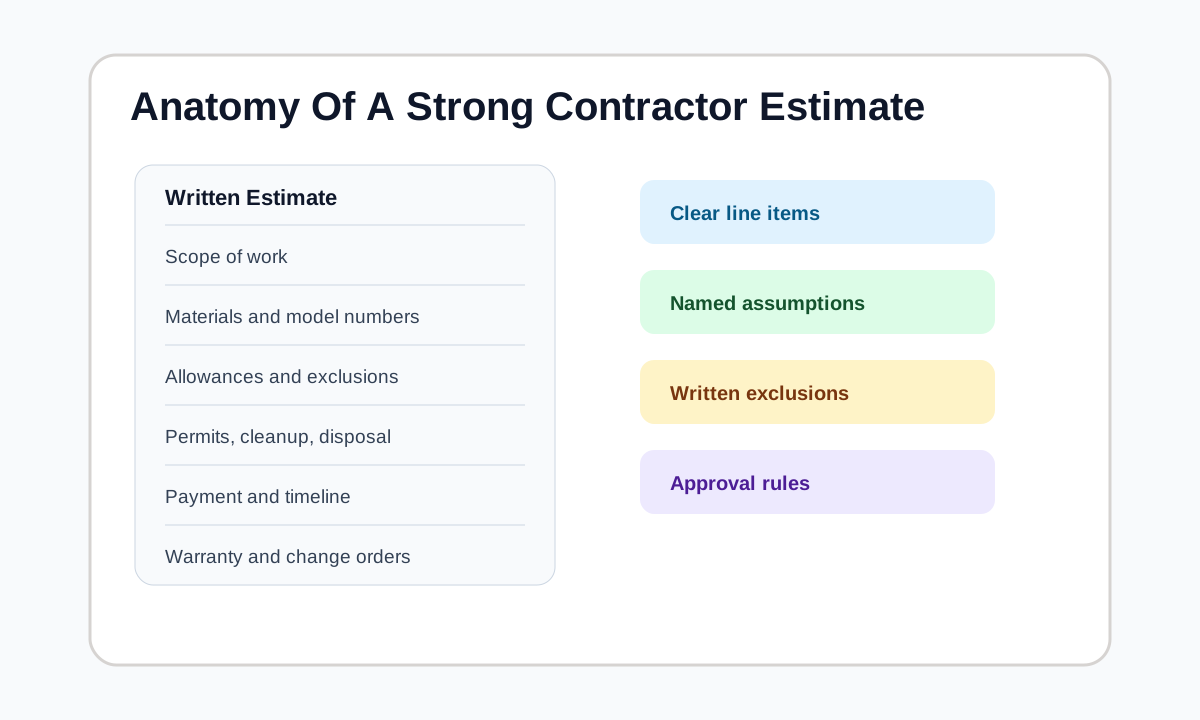
Good contractor questions are practical, specific, and tied to the quote in front of you. The goal is not to interrogate someone. The goal is to understand scope, assumptions, materials, schedule, payment, warranty, communication, and change-order process before you hire.
Ask questions in writing when possible, especially for larger projects. Written answers can be folded into a revised quote so both sides are working from the same assumptions.
Business, insurance, and responsibility questions
You can ask contractors how their business is set up, whether they carry insurance, and what documentation they can provide without making legal judgments yourself. Requirements vary, so verify important items through the appropriate sources when needed.
Also ask who will be on site, who supervises subcontractors, and who communicates schedule changes. The person who sells the job is not always the person managing the work.
Scope and material questions
Scope questions should turn broad promises into work steps. Ask what is included, what is excluded, what areas are affected, what prep is included, and what finished condition is expected.
Material questions should identify product lines, model numbers, finishes, allowances, substitutions, lead times, and warranty. If materials are not final, ask how selections are approved and how allowance differences are handled.
Timeline, payment, and warranty questions
Timeline questions should cover start window, duration, dependencies, permit timing, material lead times, work hours, and what could delay the project. A realistic schedule is more useful than an optimistic one.
Payment questions should clarify deposit, progress payments, final payment, accepted payment methods, and what has to be complete before final payment. Warranty questions should clarify labor coverage, product coverage, exclusions, and who handles warranty issues.
Change-order and communication questions
Ask how changes are documented, priced, approved, and scheduled. A contractor who has a clear change-order process is not necessarily expecting problems; they are explaining how project changes are managed.
Communication questions matter because most frustration comes from surprises. Ask who your point of contact is, how often updates are provided, and how urgent issues should be handled.
Printable-style hiring question checklist
- What exact scope is included and excluded?
- Which materials, model numbers, finishes, or allowances are included?
- Who handles permits, inspections, cleanup, and disposal?
- What is the start window, expected duration, and likely delay risk?
- What deposit, progress payment, and final payment terms apply?
- How are change orders approved before extra work begins?
- What warranty applies to labor and materials?
- Who is my day-to-day contact during the project?
Example question flow
For a roof quote, you might start with scope: How many layers are included in tear-off? What underlayment, flashing, and ventilation work are included? Then move to risk: What happens if damaged decking is found? Is there a per-sheet price? Then closeout: Is disposal, magnetic nail cleanup, permit, and warranty registration included?
For a bathroom quote, the flow changes: What waterproofing method is included? What fixture allowances are included? Are plumbing and electrical changes included? What happens if hidden water damage is found? The best questions match the project type.
Question category table
| Category | Ask about | Why it matters |
|---|---|---|
| Scope | Included work, exclusions, finished condition | Defines what you are buying |
| Materials | Products, allowances, substitutions | Prevents quality and cost surprises |
| Timeline | Start, duration, dependencies | Sets expectations and decision deadlines |
| Payment | Deposit, milestones, final payment | Shows how financial risk is shared |
| Warranty | Labor, product, exclusions | Clarifies after-completion support |
| Communication | Point of contact and updates | Reduces project confusion |
Contractor red flags
- The contractor treats basic scope questions as unreasonable.
- Materials, warranty, or payment terms remain verbal only.
- The contractor cannot explain who manages the work.
- Change orders are handled informally without written approval.
- You are pressured to sign before important answers are provided.
Questions to ask before hiring
- Can these answers be reflected in a revised written quote?
- Who will be on site and who is responsible for quality control?
- What assumptions could change the price?
- What decisions do you need from me before work starts?
Related tools and references
How to use this guide with a real quote
- Use the checklist before the final sales conversation, not after you have already decided. Questions are most useful while the quote can still be revised and before deposits or material orders create pressure.
- Group questions by topic so the conversation feels organized. Start with scope, then materials, timeline, payment, warranty, change orders, and communication. This makes it easier for the contractor to answer clearly.
- Ask follow-up questions when an answer is too broad. If the contractor says cleanup is included, ask what cleanup means. If they say materials are standard, ask which line, grade, or allowance is included.
- After the conversation, send a short written recap and ask whether anything should be corrected. That recap can become the bridge between a good conversation and a quote you can actually rely on.
- If you are comparing multiple contractors, ask each one the same core questions. Consistent questions make the answers easier to compare and reduce the chance that one contractor is pricing a broader job than another.
- Leave room for the contractor to explain practical constraints. A good answer may identify lead times, inspection timing, weather exposure, or sequencing issues you had not considered. Those details can make the quote stronger.
- Do not ask only yes-or-no questions. Follow a yes with what is included, what is excluded, and how it will be documented. For example, if cleanup is included, ask what cleanup means and whether disposal is part of it.
- Bring the questions back to the written quote. A helpful answer should either already be in the quote or lead to a revision, clarification, or documented note before you hire.
How this guide was created
This guide is written as a homeowner quote-review framework. It favors transparent assumptions, practical checklists, examples, and questions to ask before hiring. It does not rank contractors, provide legal advice, or claim that any planning range is an exact local price.
FAQ
Should I ask all questions before every small repair?
Use judgment. A small repair may need fewer questions, but scope, price, payment, and warranty should still be understandable.
Is it rude to ask for insurance or business information?
No. Ask respectfully and verify important requirements through appropriate sources for your area and project type.
What if the contractor gives verbal answers?
Ask for important answers to be added to the quote or confirmed in writing before you sign.
Contractor Quote Checker does not provide professional construction, legal, insurance, or financial advice. Use this guide to prepare better questions and get comparable written quotes from qualified contractors.