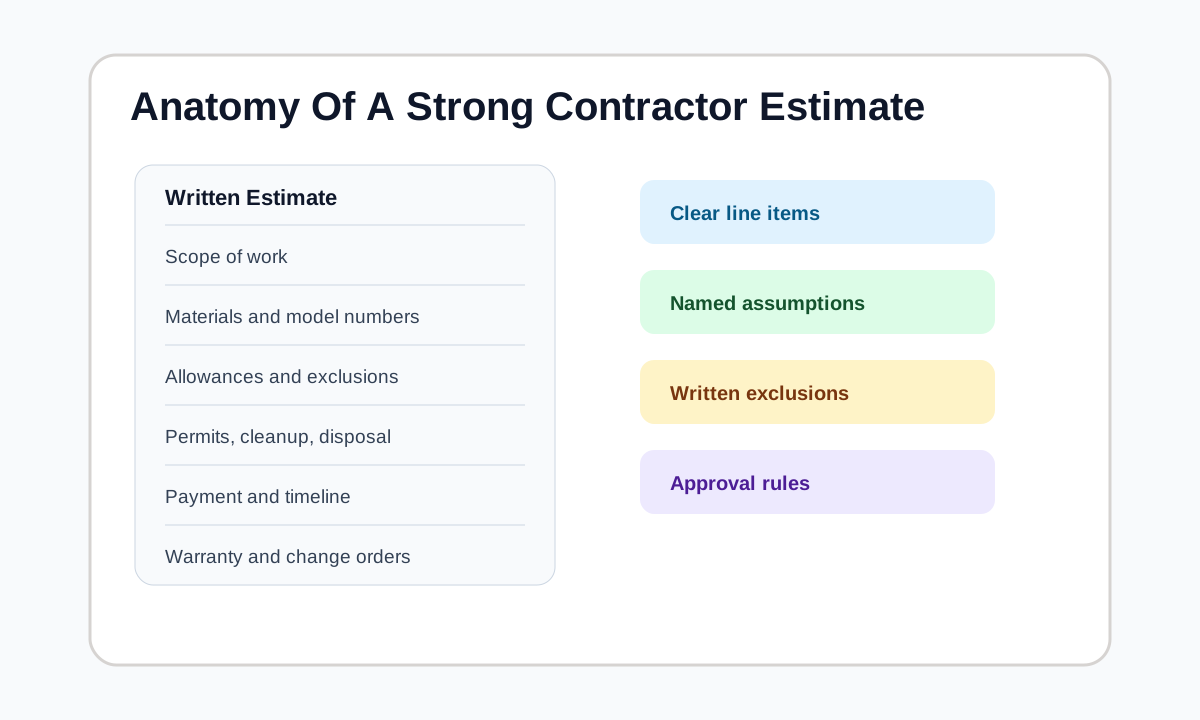
Reading a contractor estimate means looking beyond the total and asking what story the document tells. A good estimate explains what work will happen, what materials are included, what assumptions are being made, what is excluded, when payments are due, and how changes will be handled.
If you cannot explain the estimate back in plain English, it is not ready to sign. That does not mean the contractor is wrong. It means you need clarification before the estimate becomes an agreement.
Estimate anatomy
Start at the top: contractor information, homeowner information, project address, date, and estimate version. Version matters because quotes change as scope changes. If you receive a revised quote, make sure you know which version is current.
Then read the scope line by line. Look for quantities, rooms, surfaces, fixtures, systems, demolition, prep, installation, cleanup, and exclusions. The estimate should describe the project you actually discussed, not a generic category.
Scope and exclusions
Scope is what the contractor is pricing. Exclusions are what the contractor is not pricing. Both are important. A quote with a long exclusions section is not necessarily bad if the exclusions are clear and reasonable. A quote with no exclusions may still exclude things verbally, which is harder to manage.
Read exclusions as possible future decisions. If the quote excludes rot repair, subfloor leveling, permit fees, appliance relocation, or painting touch-up, ask how those items will be handled if needed.
Allowances
Allowances are budget placeholders. They are common for fixtures, tile, cabinets, counters, hardware, lighting, and other selections that may not be final. The estimate should state the allowance amount and whether it includes tax, delivery, markup, or installation.
A low allowance can make a quote look attractive while pushing real cost into later selections. Compare allowances against the products you would actually accept.
Payment schedule, timeline, warranty, and change orders
Payment schedule should be easy to understand. Deposits, progress payments, and final payments should connect to ordering, start, milestones, completion, or inspection. Avoid relying on vague payment language if the project is substantial.
Timeline should include start assumptions and dependencies. Warranty should be written. Change orders should require approval before extra work proceeds. These sections are less glamorous than finishes, but they are often where disputes begin.
Estimate reading checklist
- Confirm the estimate version and project address.
- Underline measurable scope and circle vague phrases.
- Mark every allowance and compare it with expected selections.
- List exclusions that could affect final cost.
- Review deposit, progress payments, final payment, and warranty.
- Ask for written answers before signing.
Example annotated estimate
Imagine an estimate that says: Install new kitchen cabinets and counters, $28,000. That is not enough to understand the job. An annotated review would ask: Which cabinet line? Are demolition and disposal included? Are counters an allowance or selected product? Are plumbing and electrical changes included? Are appliances moved or reconnected? Is backsplash included?
The same total becomes more useful when annotated into scope, materials, allowances, exclusions, timeline, payment, warranty, and change-order questions. The process turns a number into a decision document.
Estimate annotation table
| Estimate line | What to check | Possible follow-up |
|---|---|---|
| Labor and materials | Which labor and which materials? | Can you break out major work steps? |
| Standard fixtures | What brand, model, or allowance? | What happens if my selection costs more? |
| Prep included | What prep standard? | Does this include repairs or only basic prep? |
| Payment due | When and why? | Can payments be tied to milestones? |
| Warranty included | Terms and exclusions? | Can warranty be written into the quote? |
Contractor red flags
- The estimate version is unclear after revisions.
- Scope uses broad category names without work steps.
- Allowances are missing or unrealistic.
- Payment terms are vague or heavily front-loaded.
- No written change-order process exists.
Questions to ask before hiring
- Which estimate version should I rely on?
- What is included in this line and what is excluded?
- Which items are allowances?
- How will you document changes before doing extra work?
Related tools and references
How to use this guide with a real quote
- Use a highlighter method if the estimate is dense. Highlight scope in one color, allowances in another, exclusions in another, and payment terms in another. Blank sections become obvious quickly.
- Compare the estimate against your memory of the sales conversation. If an item was promised verbally but not written, ask for it to be added or clarified. Memory is a weak project management system.
- Read vague words as prompts for questions. Standard, included, typical, basic, prep as needed, and repair as required can all be reasonable phrases, but they should be defined when they affect price or expectations.
- After the contractor answers, ask whether the estimate should be revised. A clean revised estimate is easier to use than a chain of separate texts, calls, and side notes.
- If the estimate includes optional alternates, read them separately from the base scope. Alternates can be useful, but they should not blur what is actually included in the price you are about to accept.
- Pay attention to what the estimate does not mention. Silence about disposal, permits, inspections, warranty, material lead times, or owner responsibilities is not the same as inclusion. Ask directly before assuming.
- Look for owner responsibilities. Some estimates require you to clear rooms, move appliances, handle permits, buy fixtures, or provide access. Those responsibilities can be reasonable, but they should be visible before you compare totals.
- Read the estimate once for what is included and once for what is missing. The second pass is where you notice absent model numbers, undefined allowances, unclear cleanup, and payment terms that need revision.
- That extra pass is usually faster than fixing confusion later.
How this guide was created
This guide is written as a homeowner quote-review framework. It favors transparent assumptions, practical checklists, examples, and questions to ask before hiring. It does not rank contractors, provide legal advice, or claim that any planning range is an exact local price.
FAQ
What is the first thing to read in an estimate?
Confirm the scope and version. If the estimate does not describe the project you discussed, clarify before reviewing the total.
Are exclusions bad?
Clear exclusions can be helpful because they show what is not included. Hidden or verbal exclusions are the bigger concern.
Should I ask for changes to the estimate?
Yes, when important assumptions are unclear. A revised estimate is often better than relying on separate verbal explanations.
Contractor Quote Checker does not provide professional construction, legal, insurance, or financial advice. Use this guide to prepare better questions and get comparable written quotes from qualified contractors.