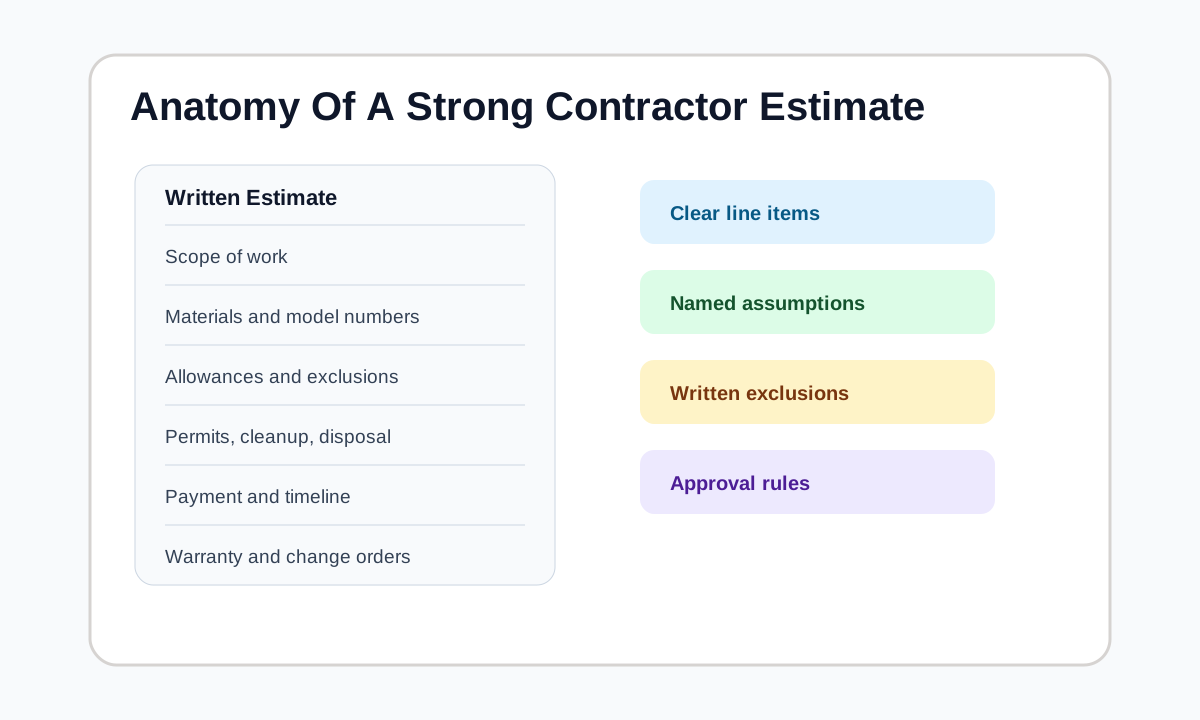
Change orders happen when the project scope, materials, conditions, or decisions change after the original quote is accepted. Some are unavoidable. Hidden damage, code issues, or homeowner upgrades can be legitimate reasons for the price to change.
The goal is not to pretend every project can be locked perfectly in advance. The goal is to reduce avoidable surprises and create a written process so changes are discussed before extra work begins.
Why change orders happen
Change orders often come from vague scope, missing materials, hidden conditions, permit requirements, or decisions that are not made before work starts. They also happen when a quote excludes prep or repair work that turns out to be necessary.
A change order is more frustrating when the homeowner thought the item was already included. That is why the best prevention happens before signing, not after demolition starts.
Clarify scope before signing
Scope clarity means the quote explains what is included, what is excluded, and what finished condition is expected. For example, paint scope should define prep, primer, number of coats, paint line, surfaces, trim, repairs, and cleanup. Flooring scope should define removal, disposal, subfloor prep, transitions, trim, and waste factor.
If a quote uses broad phrases like as needed, standard, basic, or included, ask what those phrases mean. Ambiguous language is where many change orders begin.
Make material selections early
Material selections affect cost, labor, lead time, and installation method. Tile size can affect layout labor. Flooring thickness can affect transitions. Windows, cabinets, fixtures, and equipment all have product-specific requirements.
If selections are not final, use realistic allowances and write down what happens if the selection costs more, arrives late, or requires different labor.
Plan for hidden conditions
Hidden conditions are not automatically contractor mistakes. Rot, damaged decking, old wiring, poor subfloor, plumbing issues, and code problems may not be visible until work begins. The key is to ask how those situations will be priced.
Ask for unit prices or allowance language where possible. For example, roof decking replacement may have a per-sheet price, and subfloor repair may have a time-and-material process that requires approval.
Use written approval
A clear change-order process should say that extra work requires written approval before it is performed, except for urgent safety or damage-prevention situations that are documented quickly. The document should include scope, price, schedule impact, and any warranty effect.
This process helps the contractor avoid unpaid work and helps the homeowner avoid surprise invoices. It is a project management tool, not a sign of distrust.
Change-order prevention checklist
- Define the exact work area, quantity, and finish level.
- Select materials or set realistic allowances before signing.
- Ask for exclusions and unknown-condition pricing.
- Confirm permit, inspection, and code responsibility.
- Require written approval before extra work proceeds.
- Ask how changes affect schedule, warranty, and final payment.
Example change-order clause questions
Before a bathroom remodel, ask: If hidden water damage is found behind tile, how will repair work be priced and approved? If I choose tile above the allowance, how will material and extra labor be calculated? If inspection requires a change, who documents the requirement and price?
Those questions do not eliminate every change order. They turn a surprise into a known process. That difference matters when walls are open and decisions need to be made quickly.
Change-order risk table
| Risk source | Before signing | If discovered later |
|---|---|---|
| Hidden damage | Ask for unit pricing or approval process | Document photos, scope, price, and schedule impact |
| Material upgrade | Set allowances and selection deadlines | Approve product cost and labor difference |
| Permit issue | Confirm responsibility and inspection plan | Get requirement in writing before approving cost |
| Vague prep | Define prep standard in quote | Clarify whether extra prep was excluded |
| Homeowner change | Document desired alternates | Approve revised scope before work proceeds |
Contractor red flags
- The quote says change orders billed as needed without approval language.
- Allowances are unrealistically low compared with the products you expect.
- Hidden conditions are excluded with no pricing method.
- The contractor says permits can be handled later without explaining responsibility.
Questions to ask before hiring
- What are the most likely change orders on this project?
- Can you include unit prices for common hidden repairs?
- How do I approve changes before work is performed?
- How will a change affect the schedule and warranty?
Related tools and references
How to use this guide with a real quote
- Use this guide before demolition, material ordering, or permit work begins. Once work starts, schedule pressure makes decisions harder. A written change-order process gives both sides a calmer way to handle real discoveries.
- Ask the contractor to name the most likely changes for your project type. A roofer may mention decking, a flooring installer may mention subfloor work, and a bathroom contractor may mention water damage or plumbing adjustments. Those answers make the quote more practical.
- Separate contractor-caused changes from condition-caused changes and homeowner-requested changes. The price conversation is different when the work changes because you upgraded a material versus when hidden damage appears behind a wall.
- If a change is approved, save the description, price, schedule impact, and approval message with the original quote. That record helps prevent confusion at final payment when everyone is trying to remember what changed.
- Do not rely on a verbal promise that something probably will not be needed. If the possible item is expensive or disruptive, ask for the trigger, pricing method, and approval process. That keeps a low-probability issue from becoming a high-stress argument.
- If the contractor cannot price a hidden condition upfront, ask for the decision path instead. Who identifies the issue, how is it documented, who prepares the price, and when do you approve it? A defined path is better than a vague promise.
How this guide was created
This guide is written as a homeowner quote-review framework. It favors transparent assumptions, practical checklists, examples, and questions to ask before hiring. It does not rank contractors, provide legal advice, or claim that any planning range is an exact local price.
FAQ
Are all change orders bad?
No. Some are legitimate responses to hidden conditions or homeowner-requested changes. The problem is unclear approval and surprise pricing.
Can I refuse a change order?
You can ask questions and review the contract terms. Some changes may be necessary to complete the work safely or correctly, so get the reason documented.
What should a change order include?
It should include the added or changed scope, price, schedule impact, approval date, and any warranty or material effect.
Contractor Quote Checker does not provide professional construction, legal, insurance, or financial advice. Use this guide to prepare better questions and get comparable written quotes from qualified contractors.