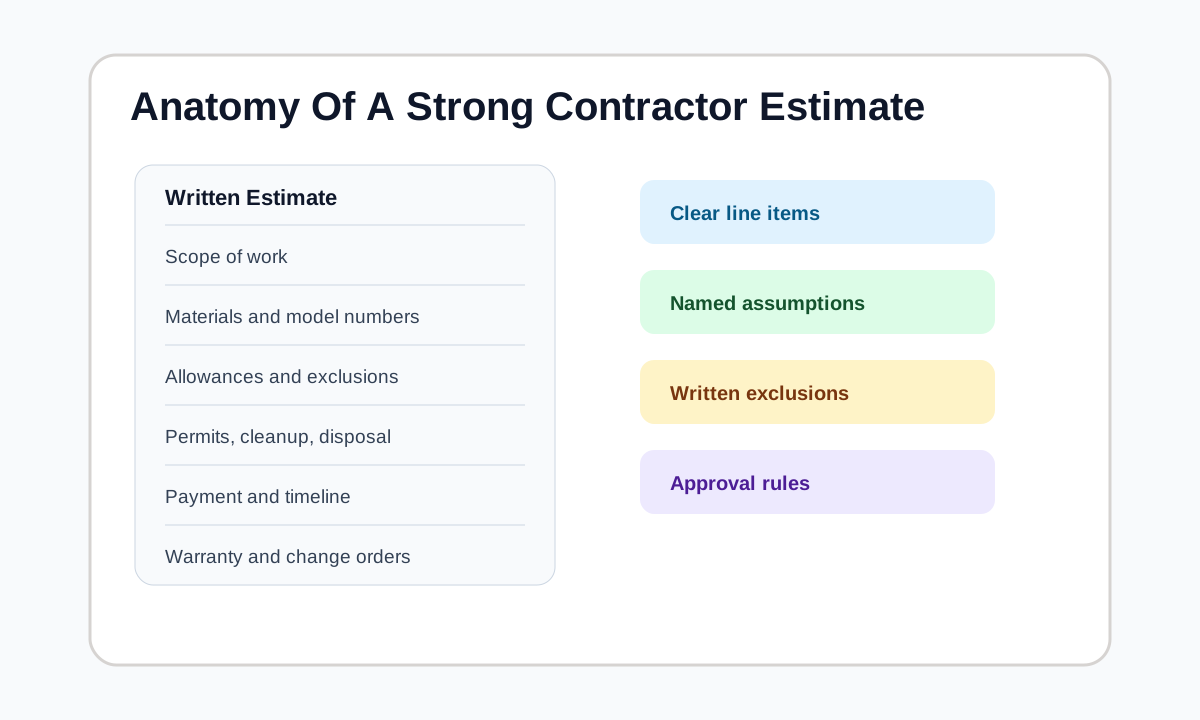
Hidden costs in home projects are usually not mysterious. They are often predictable categories that were not discussed early enough: demolition, disposal, permits, access, damaged substrate, code updates, delivery, protection, cleanup, and warranty details.
The best way to reduce hidden costs is to ask about them before signing. A contractor cannot see every condition in advance, but the quote can still explain what is included, what is excluded, and how unknowns will be priced if found.
Demolition and disposal
Removing old material can be a major part of the job. Roofing tear-off, flooring removal, cabinet demolition, deck removal, fence haul-away, and driveway demolition all require labor and disposal planning.
Ask whether demolition is included, how much material is assumed, where debris will go, and whether specialty disposal is excluded. A quote that includes installation but not removal may be incomplete for your real project.
Permits, inspections, and code updates
Permit requirements vary by project and jurisdiction, but responsibility should be clear. If inspection reveals required updates, the quote should have a change-order process for documenting and approving those changes.
Code-related work can include electrical updates, ventilation, egress, structural connections, safety devices, drainage, or equipment installation requirements. Ask the contractor which items are likely for your project type.
Repairs behind walls or below surfaces
Hidden damage often appears after demolition. Rot, mold-like staining, damaged subfloor, bad decking, obsolete wiring, plumbing problems, or poor framing may not be visible during the quote visit.
The key is not to demand a fixed price for unknown work. The key is to define how the contractor will show you the issue, price the repair, and get approval before proceeding.
Access, delivery, protection, and cleanup
Tight access, stairs, occupied-home protection, parking, material staging, and delivery constraints can change labor. So can protecting landscaping, floors, furniture, or adjacent finished areas.
Cleanup is another common gap. Final cleanup, hauling debris, magnetic nail sweeping, dust control, and punch-list cleanup should be included or excluded clearly.
Hidden-cost checklist
- Ask whether demolition and disposal are included.
- Confirm permit and inspection responsibility.
- Ask how hidden damage will be documented and priced.
- Check access, parking, staging, and protection assumptions.
- Confirm delivery, cleanup, and haul-away details.
- Ask whether code updates or substrate repairs are excluded.
Example hidden-cost review
A flooring quote includes product and installation but does not mention carpet removal, disposal, subfloor prep, transitions, or baseboard handling. The quote may be fine for new construction or an empty room with prepared substrate, but it is incomplete for many replacement projects.
A better review asks the contractor to clarify each hidden-cost category before signing. If subfloor repairs are unknown, ask for a unit price or approval process. If transitions are excluded, ask for a line item so the comparison is honest.
Hidden-cost category table
| Category | Where it appears | Question to ask |
|---|---|---|
| Demolition | Roofing, flooring, remodels, decks | What removal is included? |
| Disposal | Almost any replacement project | Who hauls debris and pays disposal? |
| Permits | Systems, structural, electrical, plumbing | Who handles permits and inspections? |
| Substrate repair | Floors, roofs, walls, baths | How is hidden damage priced? |
| Access | Exterior, basements, upper floors | Does access change labor or schedule? |
| Cleanup | All occupied-home projects | What condition is included at completion? |
Contractor red flags
- The quote says installation only for a replacement project.
- Hidden repairs are excluded with no pricing method.
- Permit responsibility is not mentioned.
- Cleanup is assumed verbally but not written.
- Delivery, staging, or access constraints are ignored.
Questions to ask before hiring
- What hidden conditions are common on this project type?
- Can you include unit pricing for likely repairs?
- What is included for demolition, disposal, protection, and cleanup?
- How will code or permit issues be handled if they arise?
Related tools and references
How to use this guide with a real quote
- Use this guide while reviewing exclusions. Many hidden costs are named indirectly in the exclusion list: substrate repairs, code updates, permit fees, disposal, access equipment, delivery charges, or owner-supplied materials.
- Ask contractors which hidden costs are common for your specific project type. A thoughtful answer helps you distinguish normal uncertainty from a quote that is simply incomplete.
- When possible, ask for unit prices or allowances for likely hidden items. A roof quote might include decking replacement pricing, while a flooring quote might include subfloor repair language.
- If a hidden condition appears, request photos, a written explanation, price, and schedule impact before approving extra work. Documentation protects the project relationship and makes the final invoice easier to understand.
- Distinguish between hidden costs and optional upgrades. Replacing rotten sheathing is different from choosing a premium finish. Both can increase cost, but they should be explained and approved differently.
- Ask whether the quote assumes normal access. Narrow driveways, stairs, long carries, occupied rooms, landscaping protection, or limited parking can turn a simple installation into a more labor-intensive project.
- Use hidden-cost questions before comparing prices. A quote that already includes removal, protection, disposal, and likely prep may look higher than a quote that leaves those items for later, but the higher quote may be closer to the real project.
- Ask what happens if no hidden issues appear. If an allowance is included for a possible condition, the quote should explain whether unused allowance money is credited, left unused, or never charged unless the work is approved.
- Hidden costs are easier to manage when they are named before work starts. Add them to your quote review checklist even if the contractor believes they are unlikely.
- Named risks are easier to compare than surprise invoice lines.
- Ask early and document the answer before signing anything.
How this guide was created
This guide is written as a homeowner quote-review framework. It favors transparent assumptions, practical checklists, examples, and questions to ask before hiring. It does not rank contractors, provide legal advice, or claim that any planning range is an exact local price.
FAQ
Are hidden costs always unfair?
No. Some conditions cannot be confirmed before work begins. The issue is whether the process for documenting and approving them is clear.
Can I ask for all costs to be fixed?
You can ask, but contractors may exclude unknown conditions. A clear allowance or unit price is often more realistic than pretending unknowns do not exist.
What hidden cost is most commonly missed?
Demolition, disposal, prep, and substrate repair are common gaps because they happen before the finished work is visible.
Contractor Quote Checker does not provide professional construction, legal, insurance, or financial advice. Use this guide to prepare better questions and get comparable written quotes from qualified contractors.