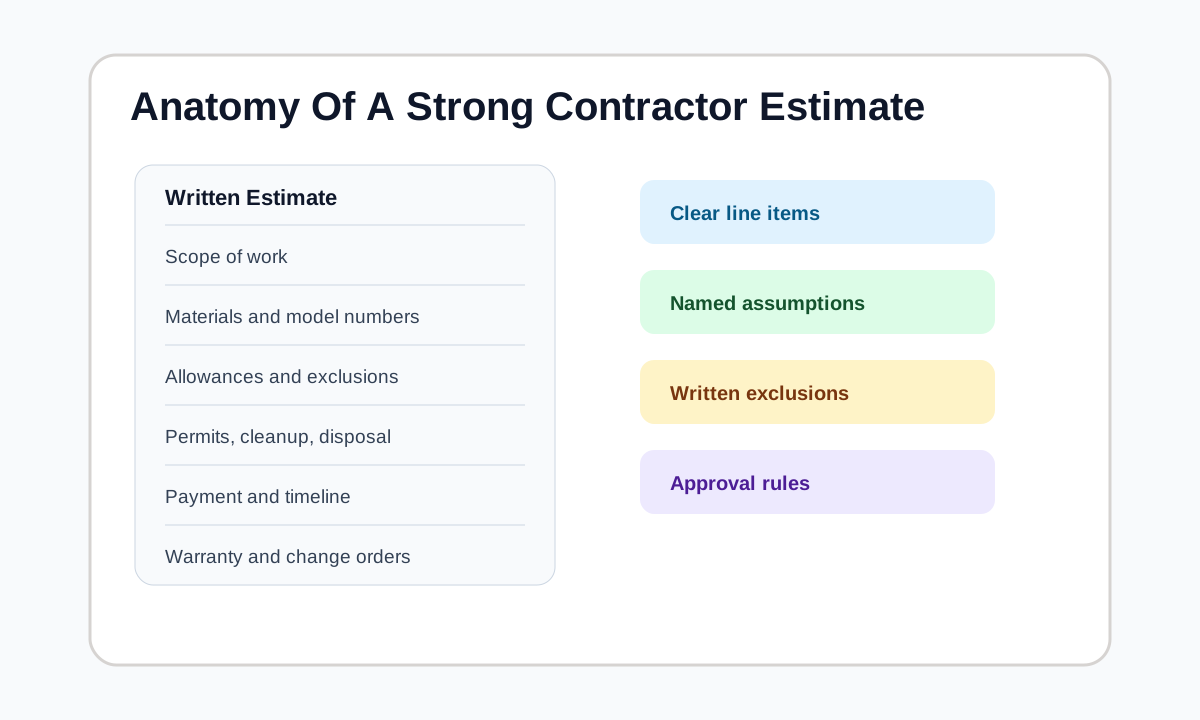
Home project quotes are shaped by both materials and labor, but the split changes by project. A water heater has a clear equipment component. Painting may be heavily driven by prep and labor. Tile, cabinets, windows, and HVAC can combine expensive products with specialized installation.
Understanding the split helps you ask better questions. If a quote is high, you can ask whether the difference comes from product quality, labor difficulty, access, prep, warranty, schedule, or risk. If a quote is low, you can ask whether materials or labor assumptions are missing.
How the split varies by project
Material-heavy projects usually involve equipment, fixtures, windows, cabinets, appliances, or specialty products. Labor-heavy projects often involve prep, demolition, layout, repair, protection, access, or finish work that requires time more than expensive products.
Many projects are mixed. A roof replacement includes shingles, underlayment, flashing, and ventilation products, but labor changes with pitch, layers, access, decking repair, and cleanup. Flooring includes product cost, but subfloor prep, transitions, stairs, and trim can change labor significantly.
Why expensive materials can increase labor
Premium materials do not only cost more to buy. They may require different handling, layout, fasteners, prep, tolerances, or specialty tools. Large-format tile can require flatter surfaces and more layout time. Premium windows may require more careful flashing and trim work. Custom cabinets can increase design coordination and installation time.
When reviewing a quote, ask whether the material upgrade changes installation labor. That prevents a surprise where the product allowance increases but the labor line also changes later.
Allowances and substitutions
Allowances are useful when selections are not final, but they can hide underbudgeting. If a quote includes a small fixture allowance and you choose mid-grade products, the final price may rise even though the contractor did not change the labor scope.
Substitutions should be handled carefully. A cheaper material may reduce product cost but create more labor, shorter warranty, different maintenance, or a finish you do not want. Ask for the full effect, not just the product price difference.
Labor difficulty factors
Labor difficulty includes access, occupied-home protection, demolition, substrate correction, height, tight spaces, stairs, weather exposure, scheduling constraints, and trade coordination. These factors may be invisible in the finished product but real in the quote.
If a contractor prices higher because of labor difficulty, ask them to identify the difficulty. A clear explanation helps you decide whether the higher price reflects real scope or whether another quote is missing something.
Materials and labor review checklist
- Ask which products, grades, finishes, or model numbers are included.
- Ask whether premium materials change installation labor.
- Check allowances against the products you actually expect.
- Identify prep, demolition, access, and repair labor.
- Ask how substitutions affect warranty, timeline, and labor.
- Compare quotes by scope, not just material price.
Example: material upgrade with labor impact
A homeowner compares two bathroom tile options. The first is a common subway tile with simple layout. The second is a large-format tile with a niche, pattern alignment, and more demanding wall preparation. The second tile costs more, but it may also require more labor.
A clear quote should show whether the higher material selection affects installation time, prep, waste, edging, waterproofing details, or schedule. Without that clarity, the homeowner may underestimate the upgrade.
Project type comparison
| Project | Material influence | Labor influence |
|---|---|---|
| Painting | Paint line and primer matter | Prep, height, trim, repairs, protection |
| Flooring | Product, underlayment, waste | Removal, subfloor prep, stairs, transitions |
| Windows | Frame, glass, product line | Install method, flashing, trim, access |
| HVAC | Equipment efficiency and capacity | Duct, electrical, line set, startup |
| Bathroom remodel | Tile, fixtures, vanity, glass | Waterproofing, layout, trades, hidden damage |
Contractor red flags
- Materials are described only as standard or premium.
- Allowances seem low compared with the products you want.
- Labor line excludes prep that appears necessary.
- Substitution language allows unspecified equivalents without approval.
Questions to ask before hiring
- What product line, model, grade, finish, or allowance is included?
- Does this material choice change labor or prep?
- What happens if I choose a product above the allowance?
- Are substitutions allowed only with written approval?
Related tools and references
How to use this guide with a real quote
- Use this guide when a quote total seems confusing. Ask whether the difference comes from the product itself, the labor required to install it, the prep needed before installation, or the warranty and closeout included afterward.
- If you are comparing material upgrades, request the installed difference, not only the product difference. A material that costs more to buy can also require more layout, waste, protection, specialty handling, or callbacks.
- If an allowance is used, compare it with actual products before signing. An allowance that looks fine on paper may be too low for the finish level you expect, which turns selection day into a budget surprise.
- When a contractor proposes a substitution, ask for the effect on cost, labor, warranty, maintenance, appearance, and timeline. A substitution should be a written decision, not an unnoticed swap.
- Do not assume the labor percentage should be the same across quotes. One contractor may include more prep, protection, disposal, or warranty support. Another may price a narrower installation. The split only helps when the scope behind it is visible.
- If you supply your own materials, ask how that affects labor warranty, schedule, returns, damaged products, shortages, and compatibility. Owner-supplied materials can save money in some cases, but they can also move risk back to you.
- When a contractor says labor is high because prep is extensive, ask them to show the prep standard. Surface condition, moisture, flatness, fastening, protection, and cleanup are easier to evaluate when they are described instead of hidden inside a single labor line.
- For close quotes, ask what would change if you selected a different material tier. The answer reveals whether the contractor understands the relationship between product choice, preparation, labor, warranty, and schedule.
How this guide was created
This guide is written as a homeowner quote-review framework. It favors transparent assumptions, practical checklists, examples, and questions to ask before hiring. It does not rank contractors, provide legal advice, or claim that any planning range is an exact local price.
FAQ
Should a quote split labor and materials?
It can be helpful, but scope clarity matters most. Some contractors use lump sums, but materials, allowances, exclusions, and change-order process should still be clear.
Can cheaper materials cost more overall?
Sometimes. A cheaper product may need more prep, more waste, shorter replacement cycles, or different maintenance. Ask about total effect.
Are allowances bad?
No. They are useful when selections are not final, but they should be realistic and clear about overages and credits.
Contractor Quote Checker does not provide professional construction, legal, insurance, or financial advice. Use this guide to prepare better questions and get comparable written quotes from qualified contractors.