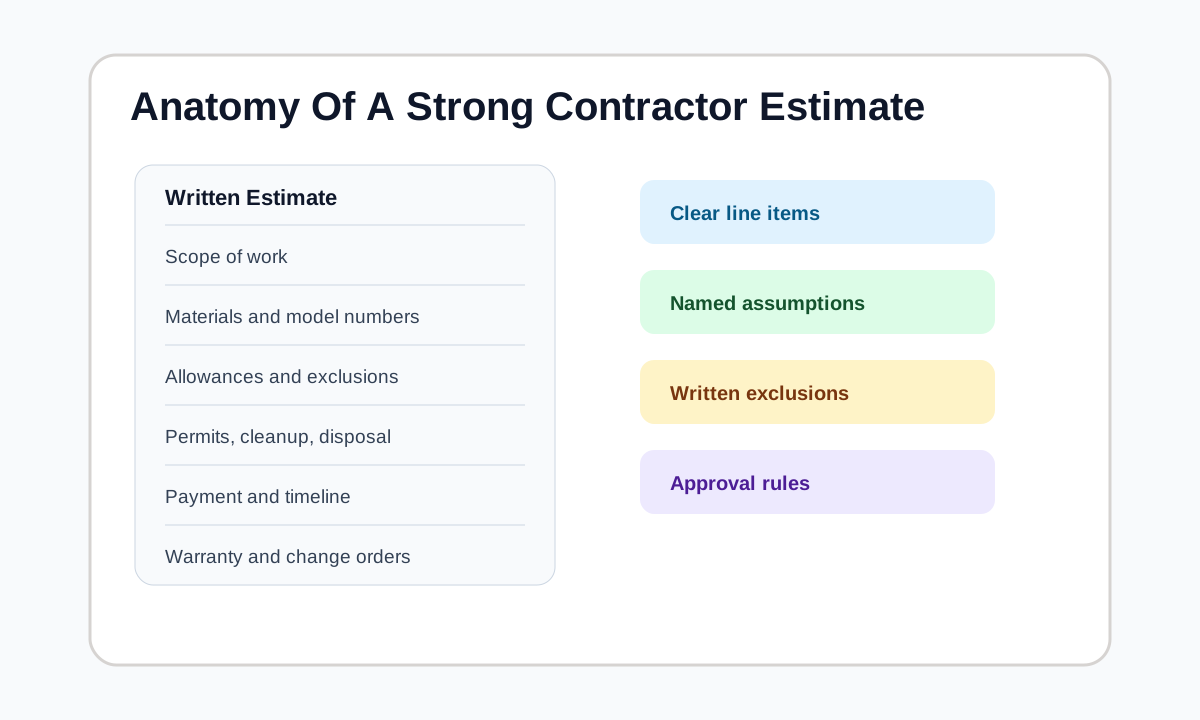
A home repair estimate is useful when it helps you ask better questions, compare contractor assumptions, and decide whether a quote deserves a closer look. It is not useful when it pretends to predict the final invoice without seeing the home, opening walls, confirming materials, or checking permit requirements.
The goal is to build a rough planning range before you request quotes or before you react to the first number you receive. A good planning estimate separates the measurable scope from the uncertain parts of the job so you can see what might reasonably move the price.
What a planning estimate can and cannot tell you
A planning estimate can tell you whether a quote is in the broad zone you expected, whether a contractor left out obvious scope, and which assumptions need written confirmation. It can also help you compare a small repair, a partial replacement, and a full replacement without treating them as the same project.
It cannot confirm hidden damage, local code requirements, structural conditions, contractor availability, manufacturer lead times, or the exact amount of labor required. Those details require a contractor visit, written scope, product selections, and sometimes inspection by the relevant authority.
- Use planning ranges to prepare, not to accuse a contractor of being wrong.
- Keep a separate list of unknowns that could become change orders.
- Treat very low numbers as a reason to verify scope, insurance, materials, and exclusions.
- Treat very high numbers as a reason to ask what risk, access, product, or scheduling assumption is included.
Step-by-step estimation process
Start by defining the project in measurable terms. That might be square feet of flooring, linear feet of fence, number of windows, number of zones, or one complete system. The unit matters because a lump sum with no quantity is hard to compare.
Next, identify the base scope. Base scope means the work you know is included before upgrades, hidden conditions, or optional improvements. Then add factors for materials, labor difficulty, complexity, access, permits, demolition, disposal, cleanup, and warranty expectations.
Finally, create a low, typical, and high planning range. The low end should represent a simple version of the job with ordinary materials and limited surprises. The high end should represent difficult access, premium materials, more prep, or more coordination. If your quote sits outside that range, the next step is not panic. The next step is better questions.
Factors that change the number
Materials are the easiest factor to see because product choices have names, model numbers, grades, and finishes. Labor is harder because it depends on access, prep, sequencing, crew size, trade coordination, and how much work has to be protected or undone before the visible installation begins.
Complexity often hides in plain sight. A small bathroom can be more complex than a larger room if waterproofing, tile layout, plumbing changes, ventilation, and electrical updates all happen at once. A fence on a slope can take more planning than a longer straight run on flat ground.
- Materials: product line, grade, finish, warranty, waste factor, delivery requirements.
- Labor: crew time, access, prep, protection, demolition, sequencing, specialty trades.
- Complexity: hidden damage, layout changes, permits, inspections, code updates, occupied-home constraints.
- Closeout: cleanup, disposal, punch list, warranty paperwork, final inspection.
Common mistakes homeowners make
The biggest mistake is comparing totals without comparing assumptions. One contractor may include disposal, cleanup, permits, and a written warranty while another may exclude all of them and look cheaper at first glance.
Another mistake is using the highest visible finish as the only price driver. Expensive tile, flooring, windows, or cabinets can increase labor because they require different prep, layout, handling, or installation tolerances. A material upgrade can create a labor upgrade.
A third mistake is ignoring uncertainty. If a contractor says subfloor repair, rot repair, decking replacement, or code updates are not known yet, ask how those items will be priced if discovered. Unknown does not have to mean unbounded.
Checklist before requesting quotes
- Write the project size, quantity, rooms, fixtures, or system count.
- List known damage, access issues, prior repairs, and urgency.
- Decide which materials are acceptable before comparing quotes.
- Ask whether demolition, removal, disposal, permits, cleanup, and warranty are included.
- Ask how hidden conditions and change orders will be priced.
- Save photos and notes so each contractor sees the same starting information.
Example: small, medium, and large repair thinking
A small project might be a single leaking fixture, a few fence panels, or one damaged flooring area. The planning range should focus on minimum trip charges, diagnosis, matching materials, and whether the repair solves the cause or only the symptom.
A medium project might involve one room, one system component, or a defined exterior section. Here the estimate should separate materials, labor, disposal, and any prep that could expand after work begins.
A large project often crosses trades or systems: a roof replacement, HVAC replacement, bathroom remodel, kitchen remodel, or finished basement. The planning range should include coordination, permits, product selections, allowances, inspections, cleanup, and a written change-order process.
Planning estimate factor table
| Factor | What to define | Why it matters |
|---|---|---|
| Scope | Size, quantity, rooms, fixtures, or system | Prevents lump-sum comparisons with different assumptions |
| Materials | Product line, grade, finish, allowance | Changes both product cost and sometimes labor |
| Labor | Access, prep, demolition, trade coordination | Often explains quote differences better than materials |
| Complexity | Permits, hidden damage, code updates | Creates change-order risk if not discussed early |
| Closeout | Cleanup, disposal, warranty, inspection | Common source of missing line items |
Contractor red flags
- A quote gives one total but does not define measurable scope.
- Materials are described only as standard, basic, or contractor grade.
- Disposal, cleanup, permits, or warranty are not mentioned.
- Unknown conditions are excluded without unit pricing or a process.
- The contractor pressures you to sign before answering scope questions.
Questions to ask before hiring
- What assumptions would make this quote go up after work starts?
- Which materials, model numbers, finishes, or allowances are included?
- Are demolition, disposal, permits, cleanup, and warranty included?
- How will you document and price change orders?
- Can you revise the quote so exclusions are written clearly?
Related tools and references
How to use this guide with a real quote
- Use the estimate as a preparation tool before you request bids. Write down the quantities, material expectations, access issues, and unknowns so each contractor is responding to the same project instead of a slightly different version of the work.
- When a contractor quote arrives, compare it against your planning assumptions one category at a time. If the quote is higher, look for better materials, harder access, broader prep, permit work, warranty, or risk allowances. If it is lower, look for missing scope before assuming it is a bargain.
- Keep a question log while you review. The most useful questions are specific: Is haul-away included? Which product line is priced? What happens if damaged substrate is found? Specific questions produce better written revisions than broad requests for a better price.
- Save the final quote, clarifications, photos, selections, and change-order answers together. A clean paper trail helps you remember what was agreed to and makes it easier to compare a second or third quote without relying on memory.
How this guide was created
This guide is written as a homeowner quote-review framework. It favors transparent assumptions, practical checklists, examples, and questions to ask before hiring. It does not rank contractors, provide legal advice, or claim that any planning range is an exact local price.
FAQ
Is a planning estimate the same as a contractor quote?
No. A planning estimate is a rough starting point for understanding scope and questions. A contractor quote should reflect site conditions, product selections, labor, exclusions, and written terms.
How many quotes should I get?
For meaningful projects, two or three comparable quotes can help you see whether price differences come from scope, materials, schedule, or missing assumptions.
What should I do if my quote is far below the planning range?
Ask what is excluded, whether materials are specified, whether cleanup and disposal are included, and how change orders will be handled. A low quote may be fine, but it should still be complete.
Contractor Quote Checker does not provide professional construction, legal, insurance, or financial advice. Use this guide to prepare better questions and get comparable written quotes from qualified contractors.