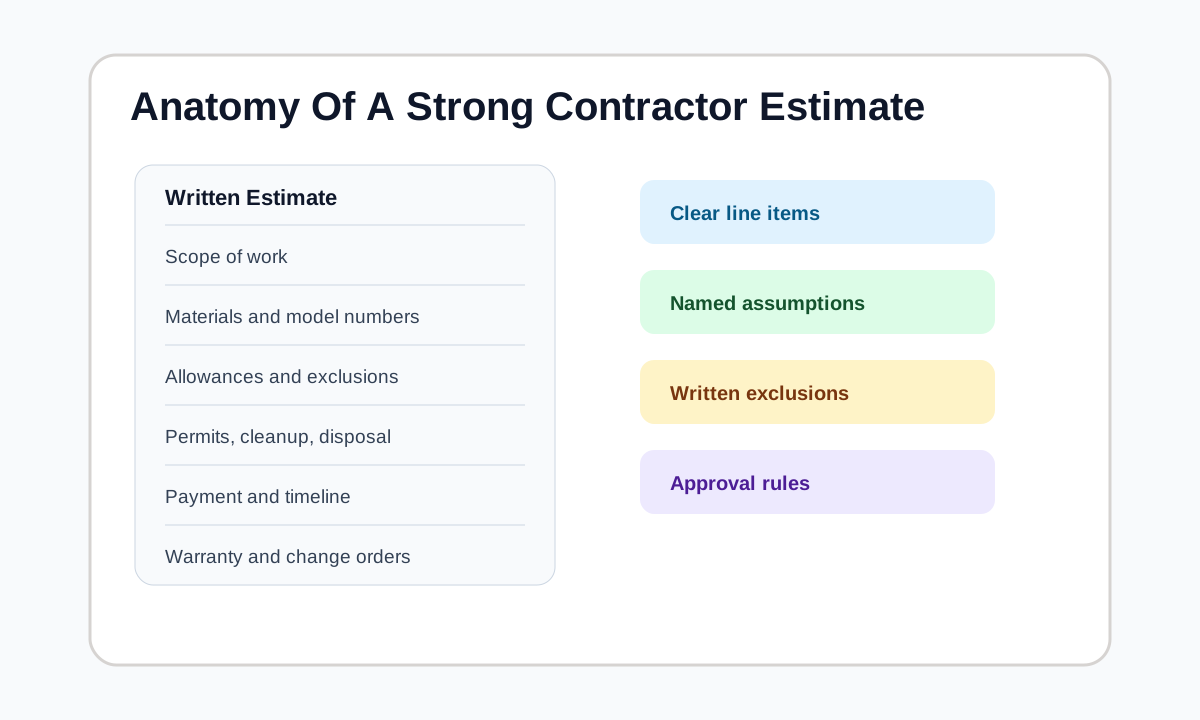
Budgeting for home repairs means planning for both the repairs you can see and the failures you cannot schedule. A useful repair budget helps you decide what to fix now, what to monitor, what to quote soon, and what to save for over time.
The goal is not to predict every project perfectly. The goal is to avoid being forced into rushed decisions because there is no reserve, no priority list, and no sense of likely project scale.
Short-term and long-term budgeting
Short-term budgeting covers immediate problems and likely repairs in the next year. This includes leaks, safety issues, failed equipment, pest or moisture problems, and small repairs that prevent larger damage.
Long-term budgeting covers systems that will eventually need replacement. Roofs, HVAC equipment, water heaters, windows, decks, driveways, fencing, flooring, and remodel-level work should be planned before they become emergencies when possible.
Priority tiers
Create tiers instead of one undifferentiated wish list. Tier one is safety and active damage. Tier two is reliability and prevention. Tier three is efficiency, comfort, and function. Tier four is cosmetic improvement.
This structure helps when quotes arrive. A high quote for a safety or water issue may still need attention quickly. A high quote for a cosmetic upgrade may be delayed while you gather more information.
- Tier 1: active leaks, electrical hazards, heat/cooling failure, structural or security issues.
- Tier 2: aging systems, exterior protection, drainage, maintenance that prevents damage.
- Tier 3: comfort, efficiency, storage, layout, and usability improvements.
- Tier 4: cosmetic upgrades that can wait without creating damage.
When to get quotes
Get quotes early for large projects, projects with long lead times, and systems near end of life. Early quotes give you time to compare scope and avoid emergency pricing pressure.
For urgent repairs, you may need one fast service call first. After the immediate issue is safe, ask whether replacement or a larger repair should be budgeted next. That second conversation is where planning begins.
Avoid underbudgeting
Underbudgeting often happens because homeowners price only the visible item. A flooring project may also need removal, disposal, subfloor prep, transitions, and trim. A water heater may need code updates, expansion tank, pan, venting, or permit. A driveway may need demolition, base prep, drainage, and curing time.
Use quote checklists to include the surrounding work. If a planning range feels uncomfortable, it is better to learn that before signing a thin quote than after work begins.
Home repair budgeting checklist
- Make a one-year repair list and a five-year replacement list.
- Separate safety, active damage, prevention, comfort, and cosmetic work.
- Use rough planning ranges before requesting quotes.
- Add reserves for demolition, disposal, permits, and hidden conditions.
- Get multiple quotes for large non-emergency projects.
- Revisit the budget after inspections or major repairs.
Example budget plan
A homeowner has an older water heater, a worn fence, and a kitchen they eventually want to remodel. The water heater goes into the near-term replacement bucket because failure would be disruptive. The fence goes into a repair-or-replace quote bucket. The kitchen goes into a longer-term planning bucket with more time for design and allowances.
This plan prevents the kitchen wish list from consuming money needed for a likely water heater replacement. It also gives the homeowner time to compare fence repair and replacement quotes before posts fail across the run.
Priority budget table
| Priority | Examples | Budget action |
|---|---|---|
| Safety/active damage | Leaks, electrical hazards, unsafe stairs | Fund immediately and get professional help |
| Reliability | Aging HVAC, water heater, roof concerns | Build reserve and gather planning quotes |
| Prevention | Drainage, exterior paint, gutter issues | Schedule before damage spreads |
| Function | Storage, layout, comfort upgrades | Compare quotes when reserves allow |
| Cosmetic | Finishes, style updates | Delay if core systems need funds |
Contractor red flags
- The budget assumes every project will be the low-end scenario.
- Emergency reserves are used for cosmetic upgrades.
- Quotes are accepted without checking missing line items.
- Old systems are ignored until failure forces a rushed decision.
Questions to ask before hiring
- Which repairs prevent larger damage if handled soon?
- Which systems are near end of useful life?
- What quote line items should I expect for this project?
- Should I price repair and replacement options?
Related tools and references
How to use this guide with a real quote
- Use this guide to turn a vague repair worry into a priority list. Write each issue down, describe the risk of waiting, and decide whether it belongs in emergency, prevention, replacement, function, or cosmetic planning.
- For larger repairs, build a rough range before requesting quotes so you can recognize missing scope. The range is not the decision; it is a way to prepare better questions and avoid being surprised by normal project complexity.
- When you receive a quote, compare it with the priority tier. A safety repair may need a faster decision, but a comfort upgrade can usually wait for clearer scope, more quotes, or a better reserve.
- Do not spend the entire repair budget on the first attractive project. Keep reserves for active leaks, heating or cooling failures, electrical concerns, and exterior issues that could create secondary damage.
- Use contractor feedback to update priorities. If two contractors independently point to the same risk, move that item higher in the plan. If a quote reveals a project is mostly cosmetic, it may be easier to delay.
- Build a small contingency into larger repair plans. The point is not to expect the worst; it is to avoid freezing when a reasonable hidden condition appears and needs a decision.
- When budgeting for a repair, include the cost of not doing it. Waiting can be reasonable for cosmetic items, but leaks, drainage problems, failing exterior protection, and unsafe components can create secondary damage that changes the budget later.
- If a project does not fit the current budget, ask what a responsible minimum scope would be. That answer can separate urgent stabilization from optional finish work.
How this guide was created
This guide is written as a homeowner quote-review framework. It favors transparent assumptions, practical checklists, examples, and questions to ask before hiring. It does not rank contractors, provide legal advice, or claim that any planning range is an exact local price.
FAQ
How much should I save for repairs?
There is no single right number. Start with system age, visible condition, emergency reserve needs, and upcoming replacement risks rather than relying only on a broad percentage rule.
Should I delay cosmetic projects?
Delay them when safety, water, electrical, exterior protection, or major system reliability needs are underfunded.
When is one quote enough?
Urgent service may require a fast decision. For larger planned projects, multiple comparable quotes usually make the decision stronger.
Contractor Quote Checker does not provide professional construction, legal, insurance, or financial advice. Use this guide to prepare better questions and get comparable written quotes from qualified contractors.